All contributions go 100% directly into this project.
No taxing, no middle men; straight to the beach, straight to the turtles.
Thank you!
What We Do Now. and why.info
Many things are done in a season at the Juara Turtle Project:
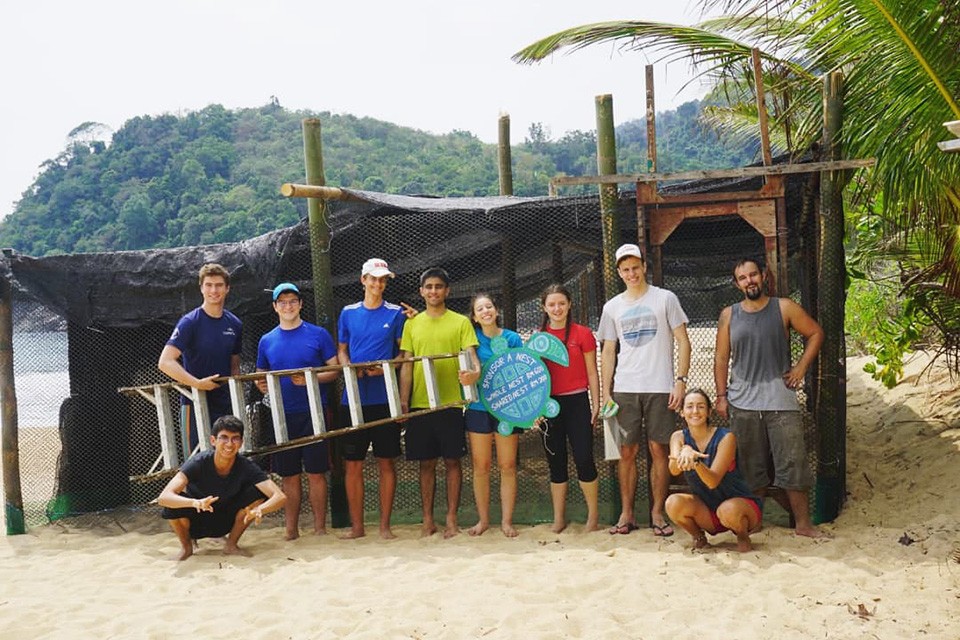
We spend most of our time running a hatchery program... Eggs are collected from a few local beaches, and we secondary nest them at our facilities. They incubate for approximately two months, and we let the hatchlings go immediately from the beach where the eggs where gathered.
We hatch eggs in protected environments to defend them from several different elements. Small and large scale egg poaching, for both personal consumption and monetary gain, are the biggest issues faced. Although we don't usually have a problem with natural predators (incl. monitor lizards, monkeys, snakes, and crabs) we still strive to keep the eggs away from them. Many Sea Turtles are almost extinct now, so every inch counts.
We patrol the further beaches by boat every morning for nests, and canvas our immediate beach (Mentawak) nightly by foot. A fantastic local fellow works with us to collect the eggs. We pay him a salary for his skills and knowledge, and a fee of 1RM per egg collected. We are in turn, literally protecting his way of life by hiring him for the purpose of infinite conservation and sustainability, instead of finite sale and consumption.
There are currently three hatchery programs on Tioman Island. Now that Tioman regulations have changed, everyone pays 1RM per egg, thus cutting down any competition and the ability for egg collection to be a profitable business venture with out an individual having a long term relationship with one of the programs.
Once born, we immediately let the hatchlings go for a few rather important reasons. First off, the babies hatch with the energy they absorb from their egg. They need this energy for their frenzy period in which they immediately swim for up to three days strait out into open water to avoid shallow water predators. By holding a baby for a short period of time (3days - 1week) they lose all this energy while becoming lethargic in their tank, thus seriously hindering their chance of survival. A chance which is already very slim.
The turtles are born with a set of instinctual instructions as to their departure from the beach, and the hindrance of these actions may have long lasting consequences to their behavior throughout the rest of their life, possibly in terms of migration and other behaviors by which Sea Turtles have already survived with for the last 250 million years.
One of the main alternatives to immediate release is a hatchery program known as "head-start", where babies are raised in tanks for a period of time and then let go under the idea that with their larger size they will be less susceptible to death. This unfortunately has not been proven to help as of now by any studies we have come across. Head-start programs can also include raising turtles for an extended period of time (3months-3years) thus it would seem almost entirely dulling any migratory and survival instincts. However it has been proven that at least one, long term head-start turtle, did return to its home beach to nest, but it has not been shown that the turtle ever left the immediate area. Turtles commonly nest on what humans consider to be nice beaches, and this can be potentially be very dangerous for the turtle, due to human activities like boating, fishing, and development.
Here in Juara there were two turtles around 2 years old being kept as pets when we took over the hatchery project in 2006. With some convincing the turtles where let go but continued to live around the jetty eating algae off boats as well as sandwiches people would toss in the water for their amusement. This is not normal activity for turtles as they would usually be outside the bay eating from sea grass beds or on a migratory swim to some place as far from here as Australia. June 2009 we found a turtle dead and washed up on the beach here almost directly in front of Juara Turtle Project. Upon inspection it had a few fish hooks in its throat and a large impact fracture head to tail on its shell. At the same time one of the two turtles that had been around the jetty was not being seen any more. While Sea Turtles commonly die from both boat impacts and fish hooks, this turtle seems to have died in the bay due to its lack of migration, after being held for an extended period of time.
Even hatcheries with a minimal interference program are treading water if there are not laws and enforcement in place for the protection of turtles and their habitats. So we think it better to but effort towards the proactive direction of sanctioned beaches, marine park enforcement, and human awareness; than towards baby-sitting methods that are not proven to be effective.
Many times, projects are found keeping hatchlings with the ulterior motive of financial gain, because tourists like to see baby turtles. This is a huge compromise for the well being of the turtles and here we do not like to accommodate visitors in this fashion. In fact, the visitors that come here and learn why we do not keep hatchlings usually leave feeling fully satisfied with their experience. They often willingly leave us a generous contribution as well. This shows that people are not as ignorant as treated and can be given more respect in the capabilities of their awareness. They do not need to see babies to be satisfied. Through learning they can be satisfied as well. Based on this, the continuation of hatchery programs that hold babies is infuriating, and offensive towards the potential environmentally sensitive capacities of the entire human species.
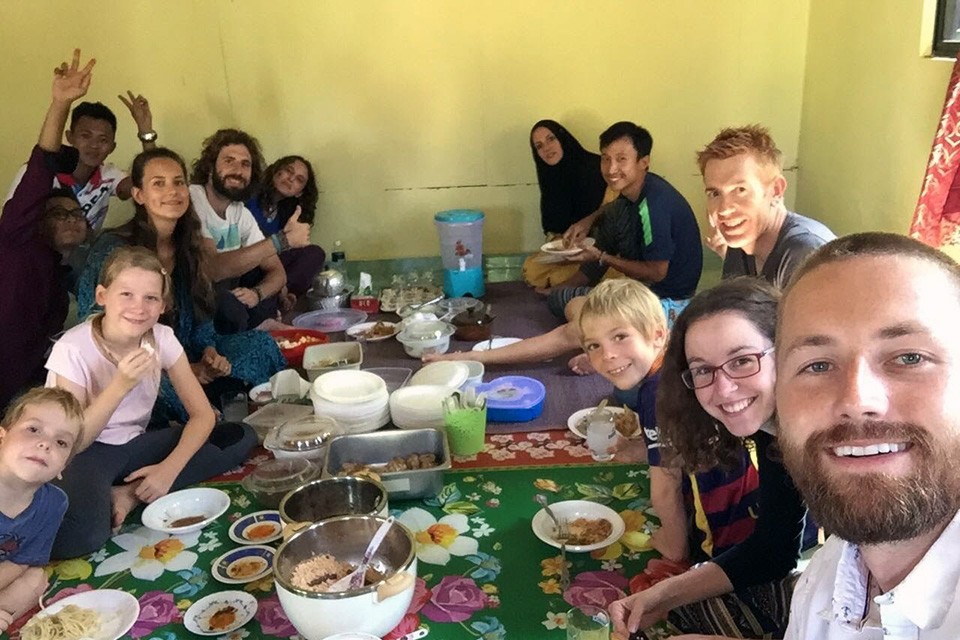
Besides the hatchery and government petition work here, we also work with people. People are the key to conservation, not projects or the animals involved. Really just person by person, the expansion of awareness is what may turn around the destructive path that human development has come to be. We pay attention to our visitors here and try to explain to them what is going on in these terms, as well as working with children to give them positive experiences in nature that may help to establish their ideals and actions later in life.
I must get back to work, keeping up on the facility here in Juara but for all who view this document please understand that our actions are based on the research we have done and on our thinking about what we should do. If you have any evidence showing otherwise please get in contact with us, it would be very much appreciated.
Cheers and Good-day. JTP 27/7/09
About Tioman and Juara
The Sea Turtle population of Tioman Island has been decimated in the past 30 years. When once female nesting turtles would come onto Juara beach nightly, now because of exploited egg consumption and development on the island this beach only has 3 or 4 nestings a year. Some of the turtles have taken refuge in nesting at nearby less desirable beaches, but for the most part the turtle population and sustainable habitats as a whole is reflected in this massive decrease of activity on Juara Beach.
Juara is still a functioning Kampung village where the economy is not entirely based on tourism. Juara still holds a chance against the direction of tourism exploitation and the destruction of many more natural habitats if conservation action is taken.
The Short Story About JTP
The Project is located in Kampung Juara, on the eastern coast of Tioman Island, Malaysia. It is operated and maintained by a small group of individuals with the help of volunteers. The majority of funding comes from revenue generated by Lagoon and Riverview resorts. Other funding is provided by United World College (UWCSEA) and donations from visitors.
Here we run a hatchery program that turns over about 10,000 eggs a season. The hatchery is made to protect the eggs from predators and poaching or consumption. As a side affect of the hatchery we now have a couple handicapped Green Turtles on site that we care for as they could not survive in the wild. We also work with school groups to encourage their interests in conservation and environmental awareness. More so, our focus is that of responsible behavior towards the environment for the sake of the environment and all the life on earth. Our work with Sea Turtles is a result of them being right in our backyard here.
The Juara hatchery was established in 2006 when Juaras’ Riverview Resort adopted a local government run turtle hatchery at the end of its five year contract.
The Project is to be run as an independent operation and is constructing a new facility as a home for the conservation project. The site is currently being constructed. The first goal is that it will be self sustainable financially. Also we would like support from Malaysian organizations, as the project is in Malaysia. Another major goal is the support of the government and especially the local community in protecting Tioman Island as a natural area. Another good step is organized communication between the different Sea Turtle and other conservation efforts within Malaysia.